
REAL-TIME DRIVER SAFETY & AZURE AI
DriveGuard AI
Dec 2025
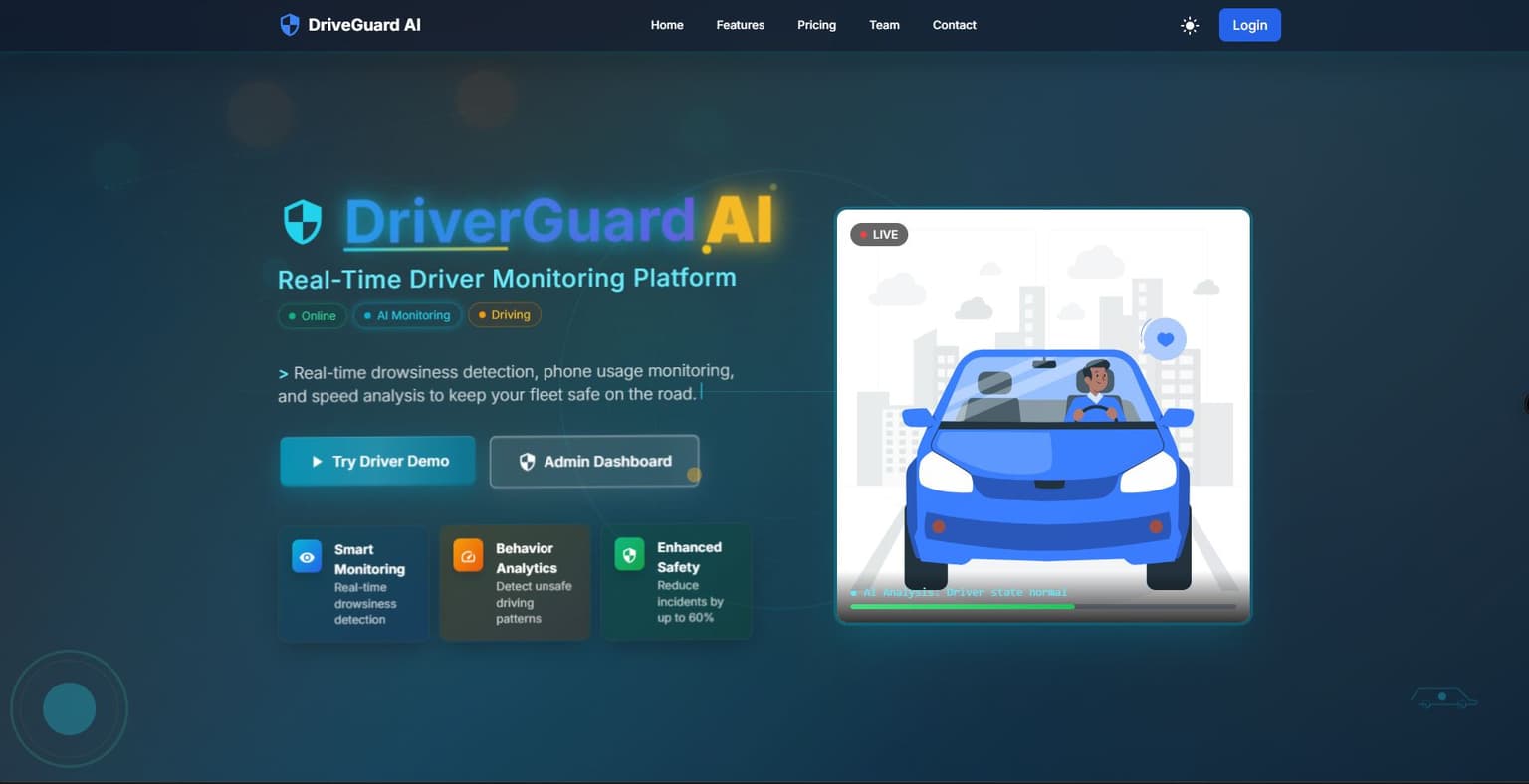
AI-powered real-time driver monitoring system for safer roads: analyzes the camera feed for drowsiness, phone use while driving, and overspeeding, with instant alerts to help prevent incidents. Combines computer vision and Azure AI for continuous, practical monitoring suited to intelligent transportation systems. Launched December 17, 2025.
Technologies
Case study
DriveGuard AI case study
Overview
DriveGuard AI is a real-time driver monitoring platform built to reduce preventable road incidents. It watches a live camera feed, classifies risky behaviour — drowsiness, phone use while driving, and overspeeding — and raises instant alerts so a driver or fleet operator can react before a crash. The public site, driver camera interface, and admin incident dashboard sit on a Next.js / TypeScript stack with Azure Computer Vision for image analysis.
The product was built as a serious prototype with a live landing at driverguard-ai.induwara.dev. It launched on 17 December 2025 and was an Idealize 2025 finalist.
Problem
Fatigue, distraction, and speed remain leading causes of road accidents. Existing fleet tools often log incidents after the fact. DriveGuard AI focuses on in-the-moment detection so alerts can interrupt the behaviour while the vehicle is still moving.
What I built
- Public marketing site explaining the safety case and product flow
- Driver-facing camera interface that streams frames for analysis
- Admin dashboard for incidents, with WebSocket-backed live updates
- GPS trip tracking and architecture notes for Azure Computer Vision + Cosmos DB
- Detection pipeline for drowsiness, handheld phone use, and overspeeding
Impact
- Idealize 2025 finalist — judged among university and industry teams for technopreneurship
- Live demo used for internships, talks, and community showcases
- Demonstrates applied computer vision on Azure rather than a slideshow prototype
- Positions the same architecture for intelligent transportation and fleet-safety use cases in Sri Lanka
Key features
- Real-time analysis of driver camera feeds
- Detection of drowsiness, phone use, and overspeeding
- Instant alerts designed to interrupt risky behaviour
- Azure Computer Vision and Cosmos DB integration
- WebSocket live updates for monitoring dashboards
- GPS trip tracking for context around incidents
Technologies
Next.js and TypeScript power the application layer. Tailwind CSS styles the UI. Azure Computer Vision analyses frames; Azure Cosmos DB stores incidents; WebSockets push live events to dashboards. Git and GitHub support collaboration and public source.
My role
Sole product engineer: architecture, Azure wiring, frontend, detection UX, and the public demo. Several cloud services are production-shaped stubs where a full fleet backend was out of scope for the competition timeline.